Regions
A region is a space defined in the Cartesian coordinate system, which help operators access and modify atoms in a much easier way. See its application in Monte Carlo (MC).
Define a region in the yaml input file as follows (units: Ang):
auto.
This region takes the simulation box of the input atoms.
region:
  method: auto
cube.
# Create a cube as ox+xl <= x <= ox+xh, oy+yl <= y <= oy+yh, oz+zl <= z <= oz+zh
region:
  method: cube
  origin: [50, 50, 50] # ox, oy, oz
  boundary: [0, 0, 0, 10, 10, 10] # xl, yl, zl, xh, yh, zh
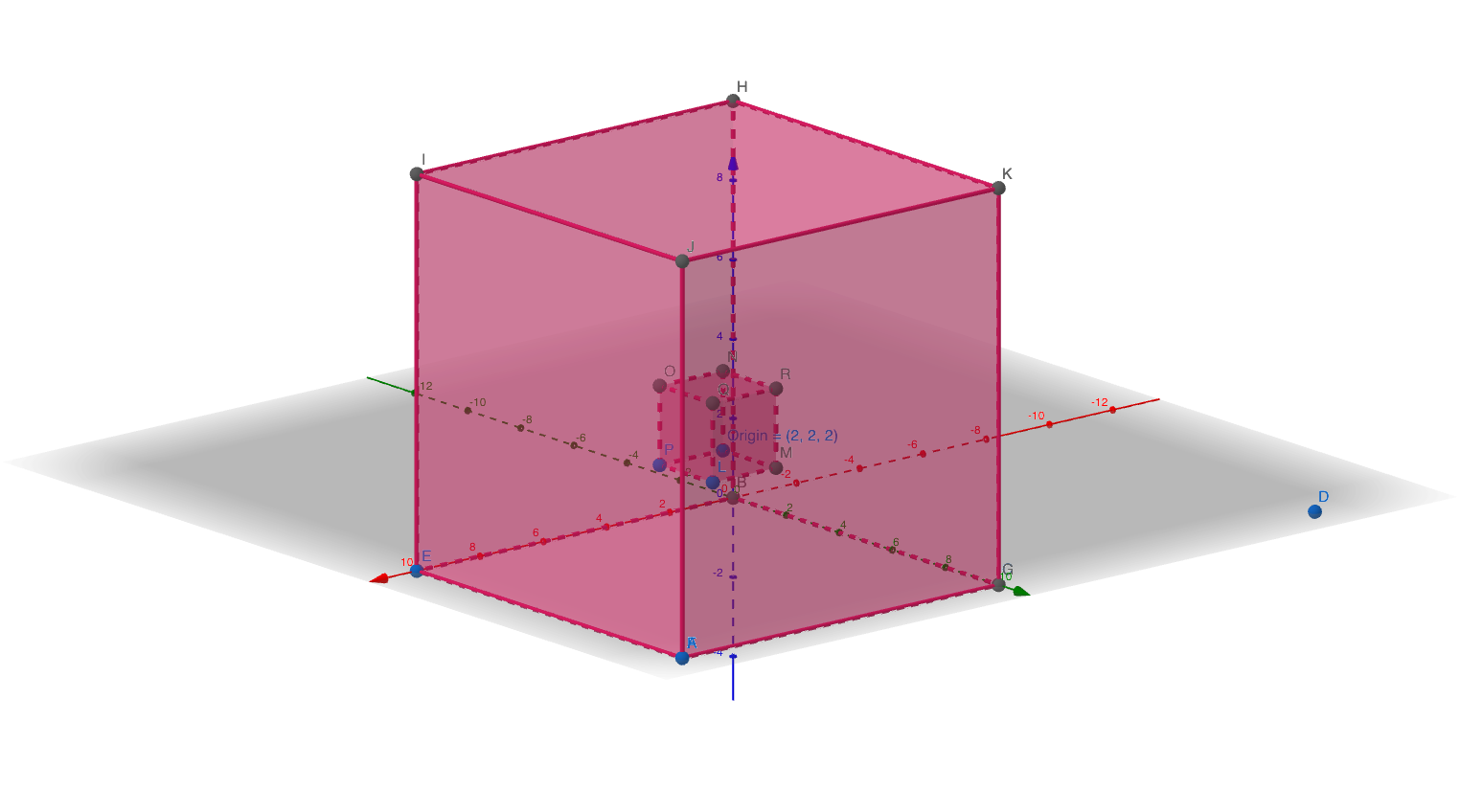
The figure shows a cubic region in a (10x10x10) simulation box. The origin is (2,2,2) and the boundary is [0,0,0,2,2,2].
sphere.
# Create a sphere centre at [50, 50, 50] with the radius 50.
region:
  method: sphere
  origin: [50, 50, 50]
  radius: 50
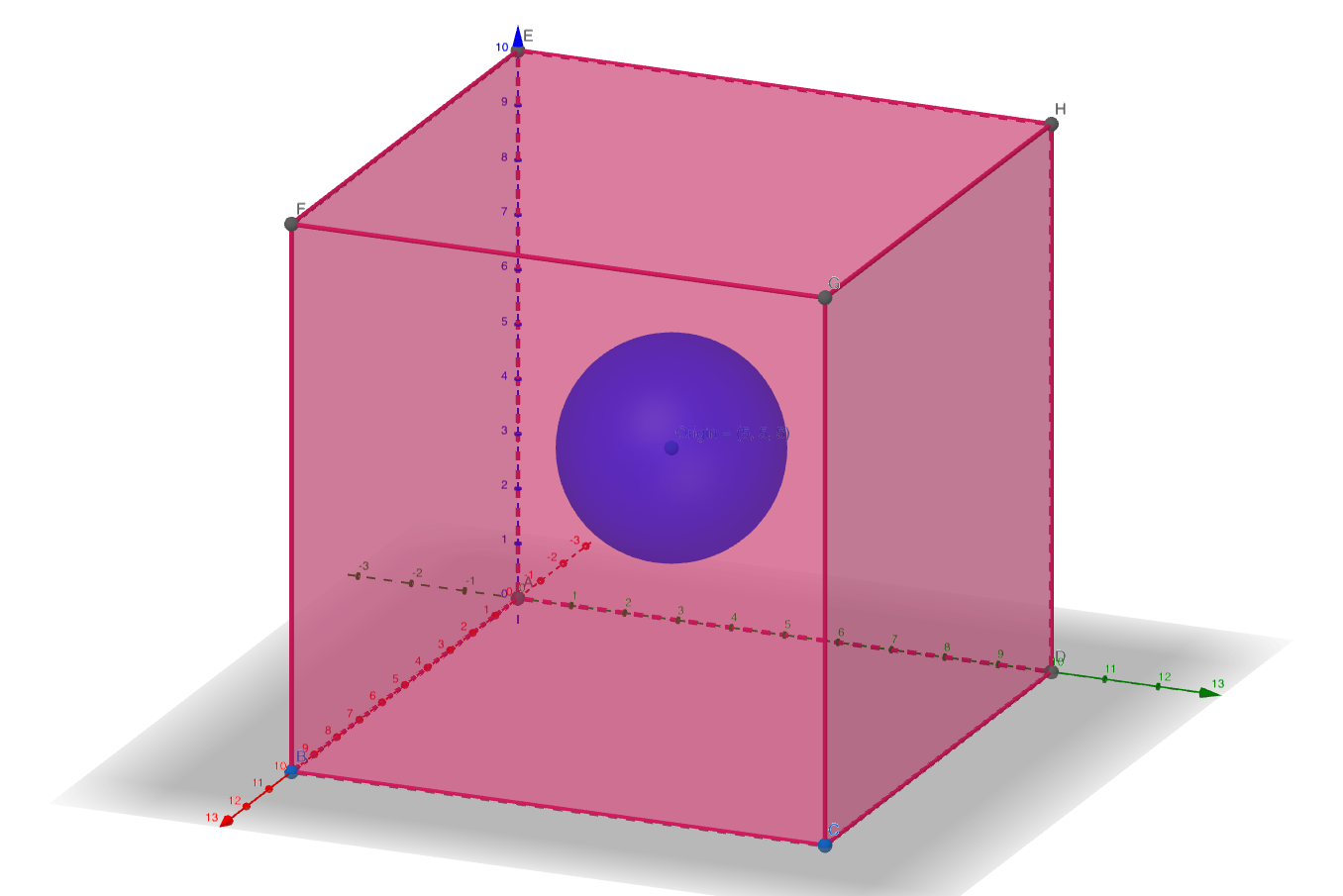
The figure shows a spherical region in a (10x10x10) simulation box. The origin is (5,5,5) and the radius is 2.
cylinder.
# Create a vertical cylinder.
region:
  method: cylinder
  origin: [50, 50, 50]
  radius: 50
  height: 20
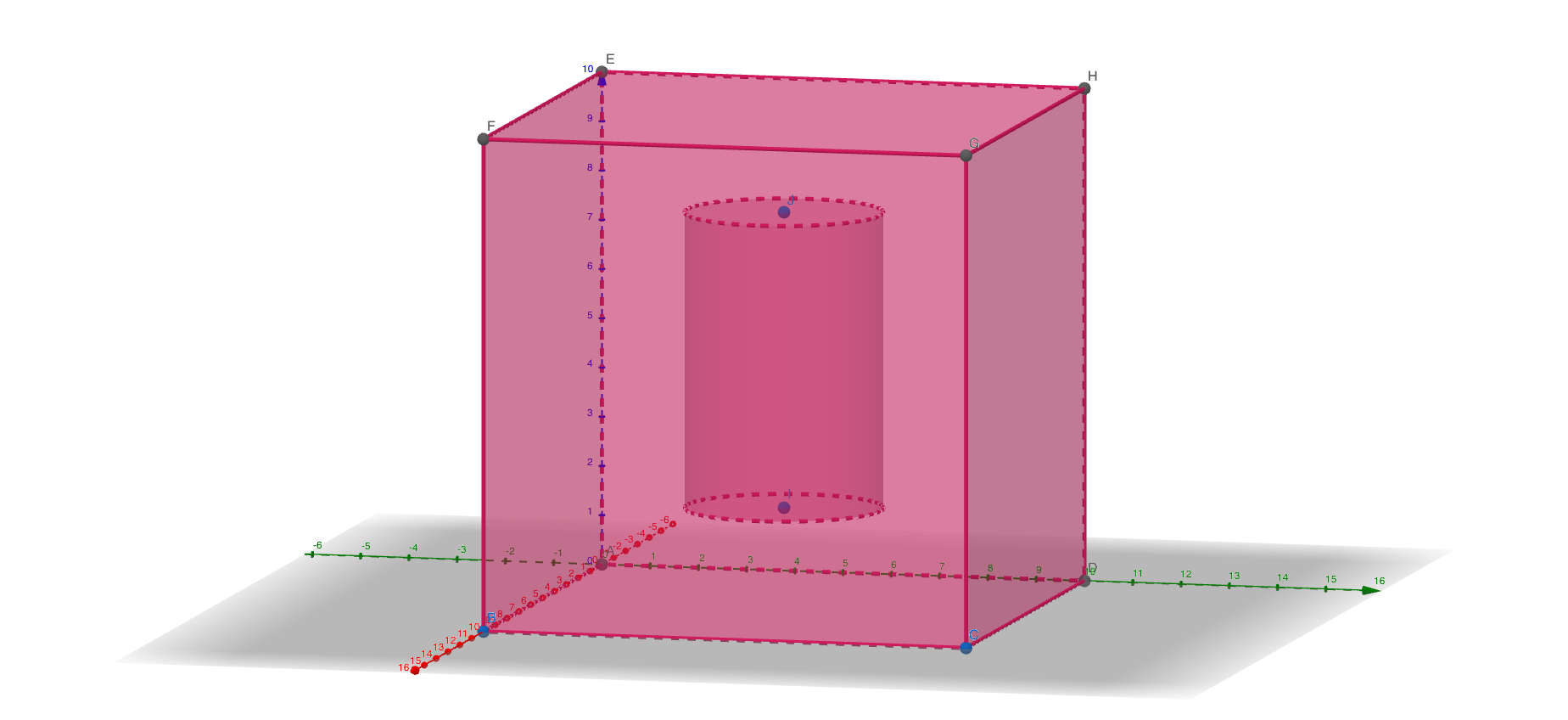
The figure shows a vertical cylinderal region in a (10x10x10) simulation box. The origin is (5,5,2), the radius is 2, and the height is 6.
lattice.
# Create a periodic cubic lattice that is centred at [50, 50, 50].
region:
  method: lattice
  origin: [0, 0, 2]
  cell: [10, 0, 0, 0, 10, 0, 0, 0, 1]
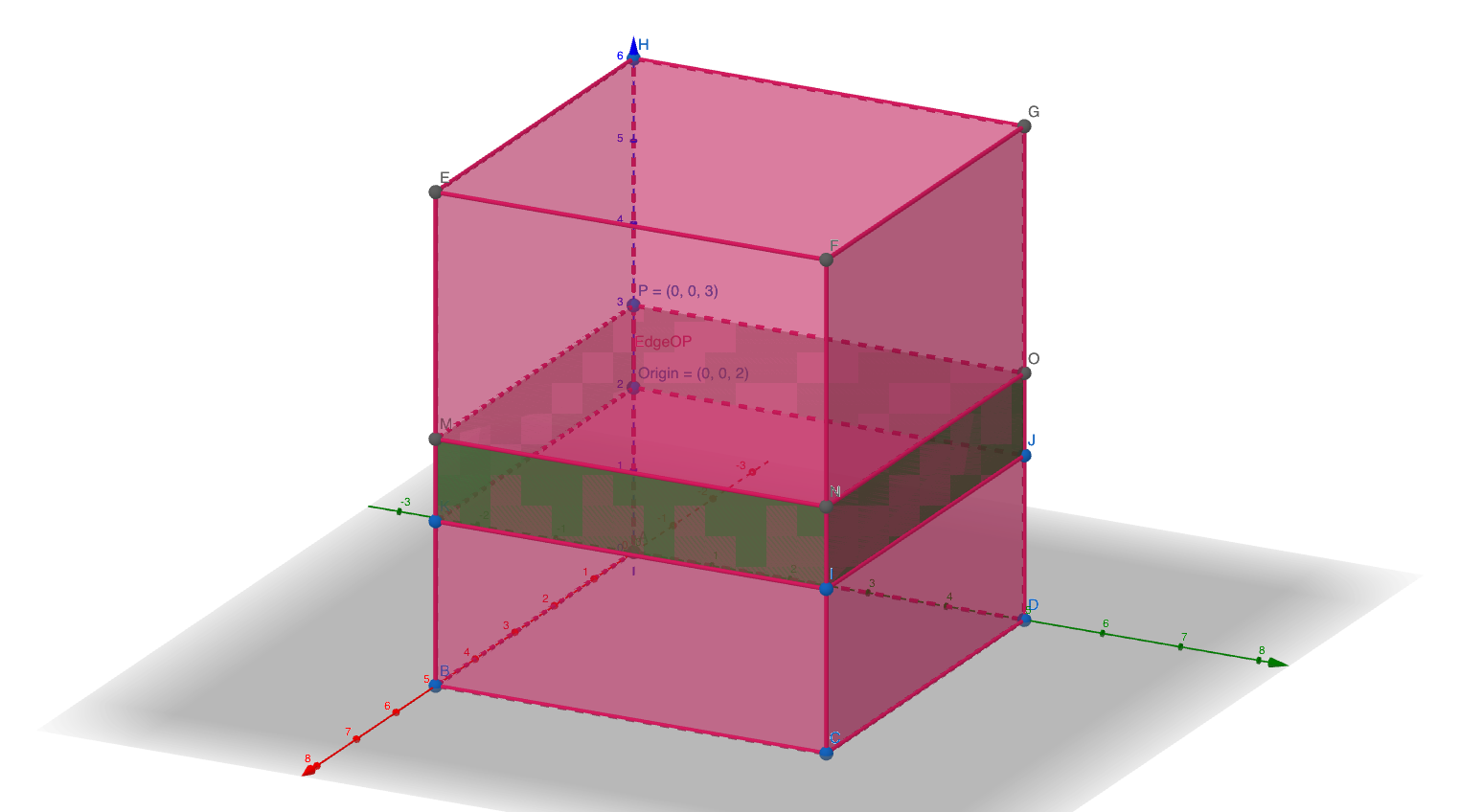
The figure shows a lattice region in a (10x10x10) simulation box. The origin is (0,0,2) and the cell is [10,0,0,0,10,0,0,0,1]. The surface thickness is 1 and atoms with z-coordinate within [2, 3) will be considered as in the region. Periodic boundary condition is used for this region.
surface_lattice
This has the same definition as lattice. However, periodic boundary condition is only applied in x- and y-axis. This is useful when only considering surface atoms.